
Last updated November 23, 2026
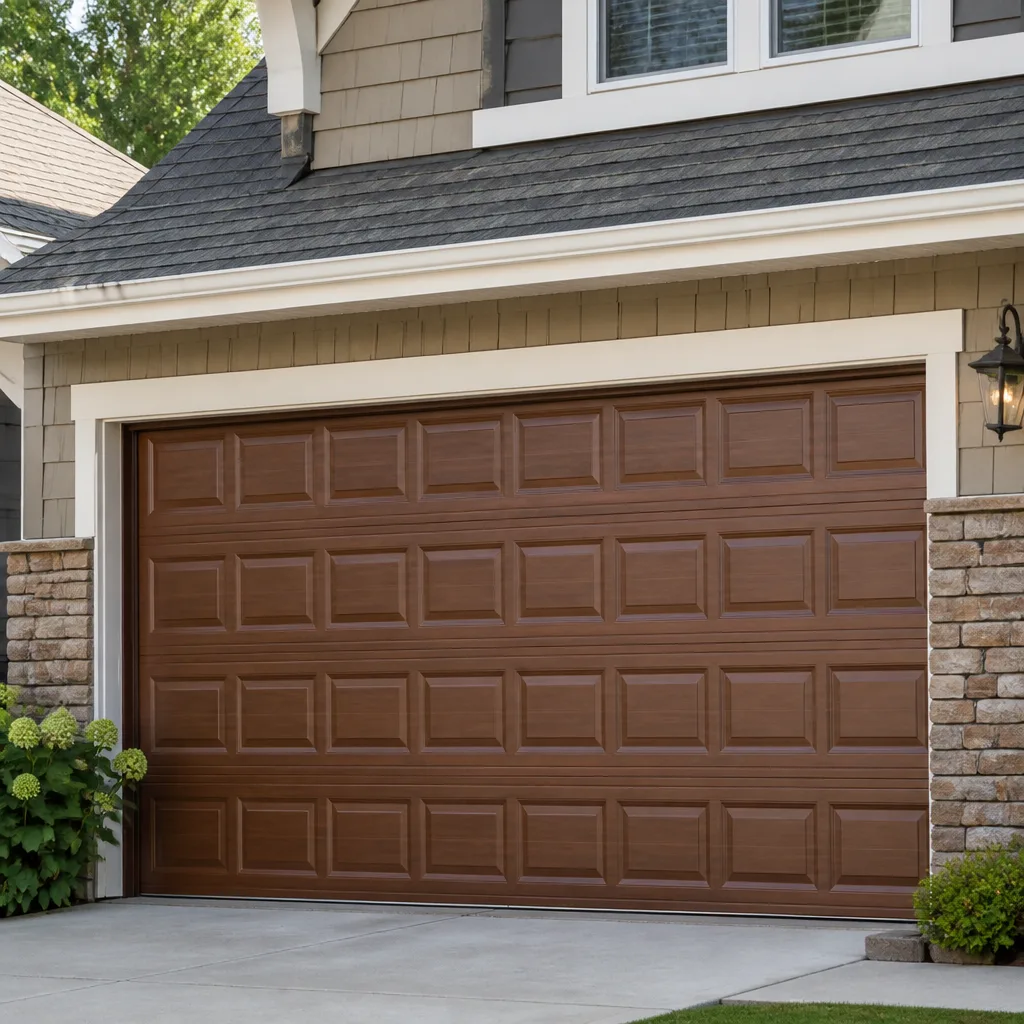 Raised-panel steel
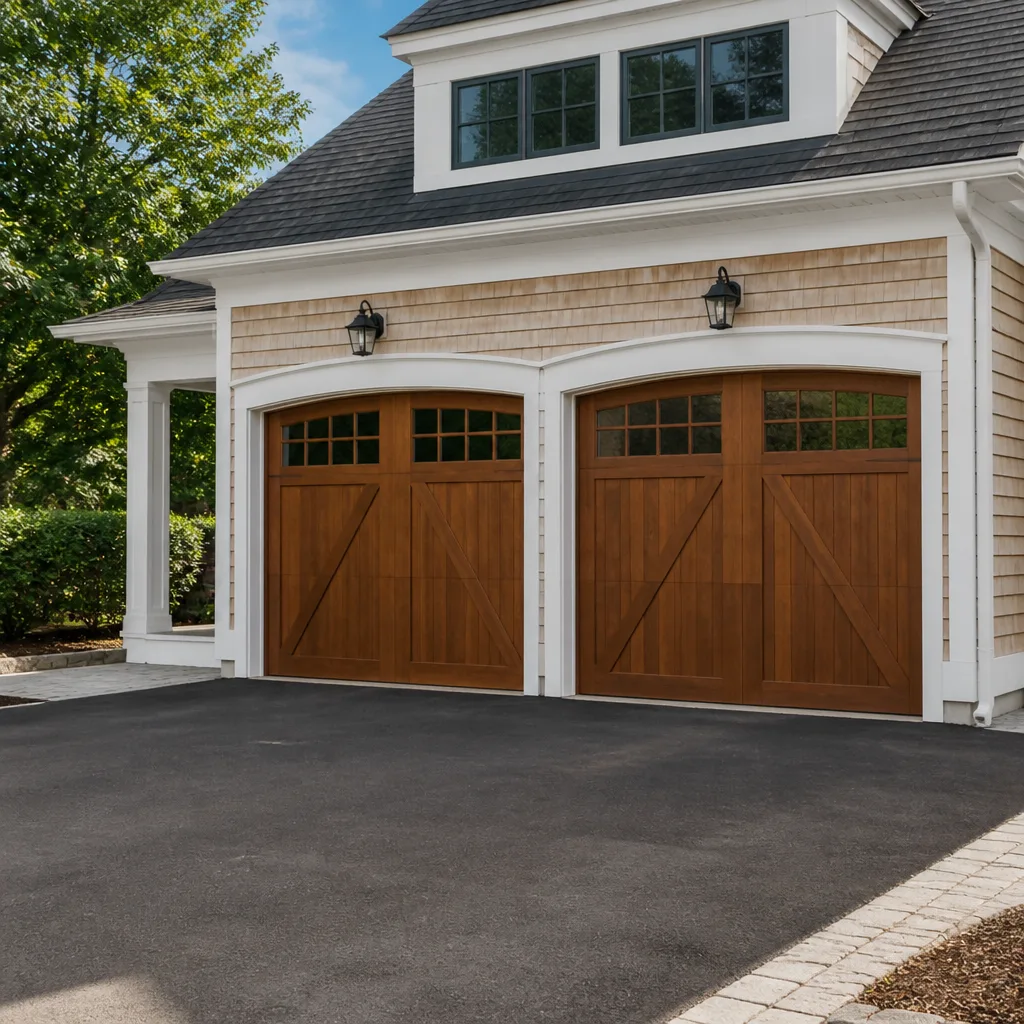 Carriage house
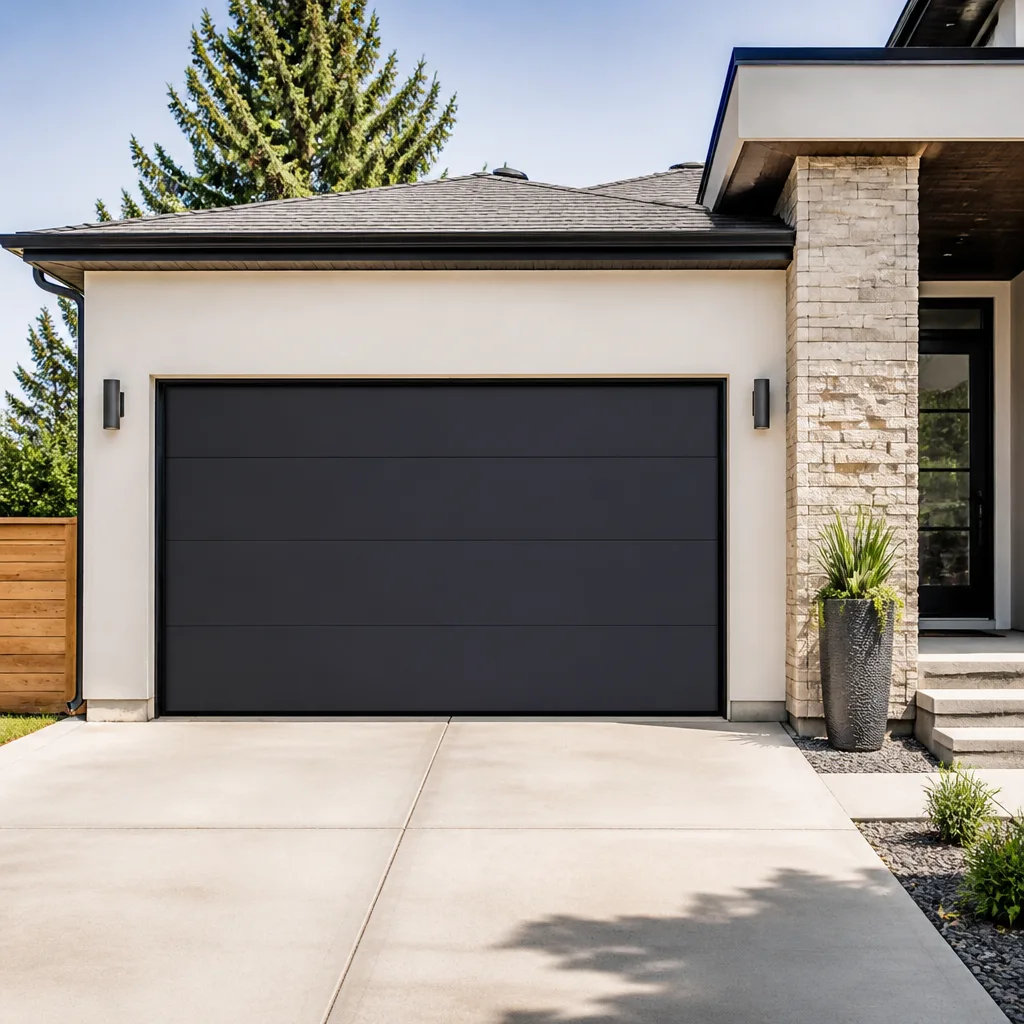 Modern flush
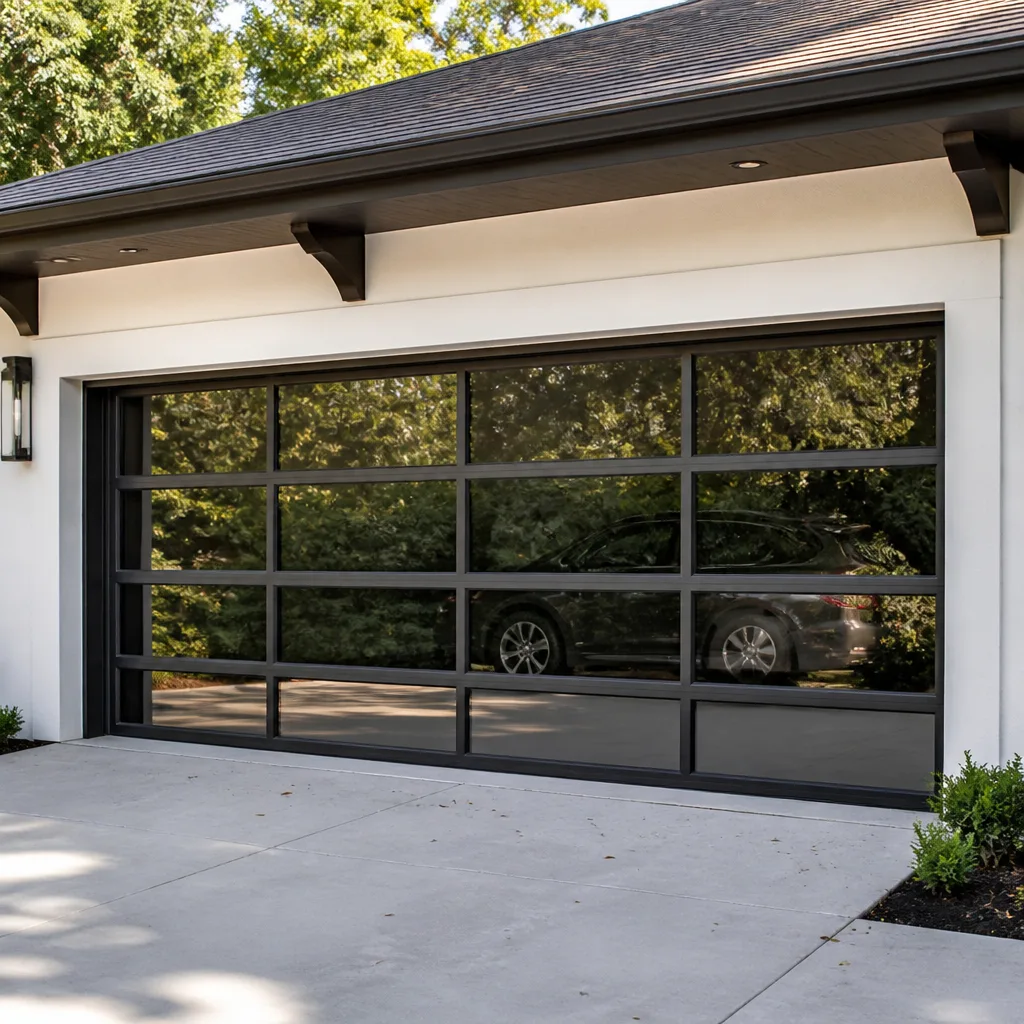 Full-view glass
 LiftMaster openers
 Chamberlain openers
Full 25-point door and opener safety check with every visit - springs, cables, rollers, tracks, and your LiftMaster or Chamberlain opener included
You get a price before we start. It does not change when the pro arrives.
Get your free estimateHow to Hire a Garage Door Contractor in New Brunswick: A Step-by-Step Guide
Here’s the part most hiring guides skip: New Jersey does not require a specialty license for garage door installation. That means the line between a qualified technician and someone who watched a few videos is drawn almost entirely by the questions you ask before you sign anything. A botched spring job or a track that’s never quite true creates liability that stays with you, the homeowner, long after the contractor’s truck pulls away. In this guide, we’ll walk you through what to verify on a New Brunswick contractor’s credentials, the interview questions that expose guesswork, and how to read a written scope of work so a dispute never comes down to memory.
Quick Answer
A garage door contractor in New Brunswick should be verified through the New Jersey Division of Consumer Affairs (NJDCA) for a valid Home Improvement Contractor registration, carry insurance that specifically covers property damage from a dropped door panel, and provide a written scope of work that names the door and opener brands, spring size, hardware, permit responsibility, and warranty terms before any work begins. Interview at least two contractors, ask the five sizing and liability questions in this guide, and treat any low bid missing permit line items or hardware brands as a warning rather than a deal.
Styles & brands we work with
- Raised-panel steel
- Carriage house
- Modern flush
- Full-view glass
- LiftMaster openers
- Chamberlain openers
Table of Contents
- Which NJ Contractor License Classifications Cover Garage Door Work?
- What to Verify on the NJDCA License Lookup Before Any Work Begins
- Five Interview Questions That Reveal Whether a Contractor Understands Springs
- Red Flags Specific to Low-Bid Garage Door Quotes
- What a Proper Written Scope of Work Must Include
- How to Verify Insurance Covers Property Damage, Not Just Liability
- Why New Brunswick Conditions Put Extra Strain on Your Door
- How to Run the Interview: A Step-by-Step Checklist
Which NJ Contractor License Classifications Cover Garage Door Work?
New Jersey does not issue a garage door specialty license. Instead, garage door installation and repair fall under the Home Improvement Contractor (HIC) registration administered by the New Jersey Division of Consumer Affairs, along with the broader home improvement contractor classification on the state’s contractor licensing framework. That’s the credential to ask for first, and the one that tells you the contractor has registered with the state and is subject to its consumer protection rules.
What this means in practice is that a general handyman registration isn’t automatically the right fit for a torsion spring job. The registration is a floor, not a ceiling. A contractor’s actual competence on garage doors depends on whether they’ve done this work repeatedly, what brands they service, and whether they understand how spring sizing works. We service Amarr doors, Wayne Dalton and Raynor systems, and Craftsman openers because those are what we find in New Brunswick homes, and brand fluency matters more than a licensing category that doesn’t exist.
Ask any contractor to state, plainly, which state registration they hold and what it covers. If they can’t name it, or they brush the question off as unnecessary, that’s your answer about how seriously they take the paperwork side of the business. The registration doesn’t guarantee good work, but a missing one guarantees you have no consumer protection path if things go wrong.
What to Verify on the NJDCA License Lookup Before Any Work Begins
The New Jersey Division of Consumer Affairs maintains a public license lookup that lets you verify a contractor’s registration status before you sign anything. It takes a few minutes and it’s the single most useful pre-hire step. The lookup shows whether a registration is active, expired, or suspended, and whether any public disciplinary history is attached to the record.
Here’s what to check in order:
- Registration status: Active and current, not expired and not showing a lapse.
- Business name match: The name on the registration should match the name on the written estimate and contract.
- Disciplinary history: Any public record of complaints or actions is worth reading in full before you call.
- Business address: A verifiable business address, not a P.O. box alone, is a good sign the operation is stable.
It’s worth running the lookup a second time right before work begins, because registrations can lapse between the estimate and the install date. If a contractor hesitates to give you the exact registered business name for the lookup, that tells you something. Ask for it directly, in writing, and check it yourself. No honest contractor will mind.
Once the registration checks out, you can move on to the interview questions that probe whether the contractor actually understands the mechanics of what’s on your wall. That’s where the real vetting happens. If you want a head start on New Brunswick Garage Door Repair Co in the meantime, our estimates are free and the written quote is the price.
Five Interview Questions That Reveal Whether a Contractor Understands Springs
A torsion spring is sized in wire gauge, inside diameter, and length, and those numbers determine the lift capacity of the door. A contractor who guesses by door weight alone is guessing. A contractor who reads the old spring’s markings and cross-references the door’s actual weight is working from data. These five questions separate the two, and we’ve watched them do that on real job calls.
- “How will you size the replacement spring?” The right answer references wire gauge, coil count, inside diameter, and door weight, not “we bring a few sizes and try them.” If they don’t mention the door’s weight or the old spring’s markings, they’re guessing.
- “Are you replacing one spring or the pair?” A matched pair is usually replaced together because the springs have cycled the same number of times. A quote for one spring on a door that runs a pair is a red flag worth asking about directly.
- “How many cycles is the spring rated for?” Standard springs are rated by cycles. If the contractor can’t tell you what cycle rating they’re installing, they haven’t specified the part.
- “What brand of spring and hardware are you using?” A specific answer with a brand name is what you want. A vague “good quality” is a question about what gets installed after the quote is signed.
- “Who handles the permit if one is required?” Most cities require a permit for structural changes to a garage door system, so ask your city’s building department what applies and make sure the contractor states clearly whether they’re pulling it.
If a contractor answers all five with specifics, you’re probably talking to a specialist. If they dodge two or three, keep interviewing. Our garage door spring repair specialists size every spring from the door’s actual weight and the old spring’s markings, because guessing on a torsion system is how doors come down.
Red Flags Specific to Low-Bid Garage Door Quotes
A quote that’s meaningfully lower than the others is almost always lower for a reason, and the reason is usually a missing line item. The quote itself tells you what got left out. Here’s what to scan for before you accept any bid.
- No permit line item. If a permit is required for your install and the quote says nothing about it, either the contractor is skipping the permit or they’ll bill you later.
- No hardware brand names. Hinges, rollers, and brackets should be named. “Standard hardware” usually means the cheapest available, which wears fast on a door that opens twice a day.
- Vague warranty language. “Warranted” with no term, no coverage scope, and no parts-versus-labor distinction is not a warranty. Ask for the terms in writing.
- Spring quote with no cycle rating. A price with no spring specification is a price for an unknown part.
- No written scope at all. A verbal quote is not a quote. If the contractor won’t put scope in writing, disputes become your word against theirs.
- Pressure to sign on the spot. Legitimate contractors give you time to compare. Urgency tactics on a non-emergency job are a sales pattern, not a service pattern.
- No insurance certificate offered. A contractor who won’t produce a certificate of insurance before work begins is asking you to carry their risk.
None of these flags is proof of a bad contractor by itself. But when two or three appear in the same quote, the pattern is the message. A homeowner calling us for garage door repair after a low-bid install goes wrong is a common scenario, and the fix usually costs more than the difference between the two quotes would have.
What a Proper Written Scope of Work Must Include
A written scope of work is the document that decides how a dispute gets resolved. If the scope is thin, the dispute is about memory. If the scope is specific, the dispute is about the document. Every legitimate garage door quote should include the following, in writing, before you sign.
- Door and opener brand and model. Name the exact product being installed or repaired. If you already own an Amarr door or a Chamberlain opener, the scope should reflect that part number, not a generic replacement.
- Spring specification. Wire gauge, inside diameter, length, and cycle rating for each spring being replaced.
- Hardware list. Hinges, rollers, brackets, cables, and drums by brand and type.
- Permit responsibility. Who pulls the permit, and who covers the inspection if one is required.
- Payment schedule. The written estimate sets the final price. A scope that leaves the final price open is not a scope.
- Warranty terms. Parts and labor separately, with the term for each stated in months or cycles.
- Timeline and cleanup. When the work starts, how long it typically takes, and what gets hauled away.
The absence of any of these in a quote is a preview of how that contractor handles a complaint. A contractor who won’t put the spring size in writing on the front end won’t put it in writing when you call about a premature failure either. If the scope is thorough, the work is usually thorough too.
How to Verify Insurance Covers Property Damage, Not Just General Liability
General liability insurance is not the same thing as coverage for property damage caused during a garage door install. A dropped door panel can crack a car windshield, damage a driveway, or take out a wall. You want to see a certificate of insurance that specifically covers property damage from the work being performed, not just a generic liability line. The local professional is licensed and insured as their state requires, and verifying the coverage is your job before work starts.
Ask for the certificate of insurance in writing, and check three things:
- General liability coverage is active and named for the business you’re hiring.
- Property damage coverage is included within that liability policy, not excluded, and the limits are stated on the certificate.
- Workers’ compensation coverage is in place if the contractor brings helpers onto your property.
If a contractor can’t produce a certificate, don’t accept a verbal reassurance. A certificate comes from the insurer, not the contractor, and it’s the only document that matters if something gets damaged. Ask for it to be emailed or handed over before anyone touches the door, and keep a copy.
One more point worth asking about: if a panel does get dropped and cracked, whose policy pays? The answer should be the contractor’s property damage coverage, not your homeowner’s policy. That’s how liability is meant to work, and asking the question on the front end keeps it that way.
Why New Brunswick Conditions Put Extra Strain on Your Door
Central New Jersey’s freeze-and-thaw cycle runs hard on garage door hardware. Winter temperatures drop below freezing for weeks, then warm enough to thaw, and that cycle works on the metal. Springs lose tension gradually through the cold months, tracks shift as the concrete under the slab moves, and rollers that ran smooth in October can bind by January. When spring finally gives way, it usually happens on the coldest morning of a stretch, which is the morning you least want to deal with it.
New Brunswick’s housing stock adds its own variables. Older homes around the city center often have original door openings that have settled slightly, which means the track has to be shimmed rather than just bolted. Newer construction on the edges of town often uses lighter-gauge doors that take a different spring size. Neither is a problem a specialist can’t handle, but both are reasons a contractor who works in the city regularly has an easier time than one who doesn’t.
Humidity matters too. A damp summer tightens wood door frames and loosens the mounting points, which is part of why so many door failures show up right after a wet spring. If your door has been sticking for a season, that’s the season to get it looked at, not the morning after it fails.
How to Run the Interview: A Step-by-Step Checklist
Here’s the sequence we recommend for interviewing any garage door contractor in New Brunswick. Work through it in order, and stop the interview if a contractor fails at any step. There’s no point continuing past a missing registration or an insurance gap.
- Ask for the registered business name and HIC registration. Verify both through the NJDCA lookup before the conversation goes any further.
- Request the certificate of insurance. Confirm general liability and property damage coverage are both active.
- Ask the five spring questions. Specific answers indicate a specialist. Vague answers indicate guesswork.
- Request a written scope of work. Compare the scope line by line against the checklist above.
- Confirm the permit question. Ask your city’s building department what applies and make sure the scope reflects it.
- Verify the estimate is written and itemized. The written estimate sets the final price, and the price is quoted and agreed before any work starts.
- Check the warranty terms in writing. Parts and labor separately, with a stated term for each.
When all seven are complete, you’ve done the vetting. When any one is missing, you’re carrying the risk. Our technicians have up to 10 years of experience and we work on the brand door and opener you already have, including Amarr, Wayne Dalton, Raynor, and Craftsman. If you’ve had a contractor fall short on a repair, our garage door opener repair service starts with a full diagnosis of what’s actually wrong before anything gets replaced.
Common Mistakes to Avoid
- Hiring the lowest quote without checking what’s missing. Low bids usually leave out permit line items, hardware brands, and warranty terms, and you pay for all three later.
- Skipping the NJDCA lookup. A contractor who isn’t registered has no consumer protection path behind them. Verify before the first estimate.
- Accepting a verbal quote. Verbal quotes set nothing in writing and leave you with no recourse if the bill comes in above what was discussed.
- Assuming a low spring price means one spring covers a pair. A matched pair costs about twice the price of one spring, and replacing one spring on a paired door is asking for a return visit.
- Not asking who pulls the permit. In New Brunswick, a garage door install that needs a permit but skips one can complicate a future sale. Ask your city’s building department and get the answer in writing.
- Ignoring track and mounting-point wear while replacing springs. A new spring on a warped track wears faster and starts binding within a season.
- Using the homeowner’s insurance for contractor-caused damage. Damage caused during an install should come out of the contractor’s property damage coverage, not your homeowner’s policy.
See the difference
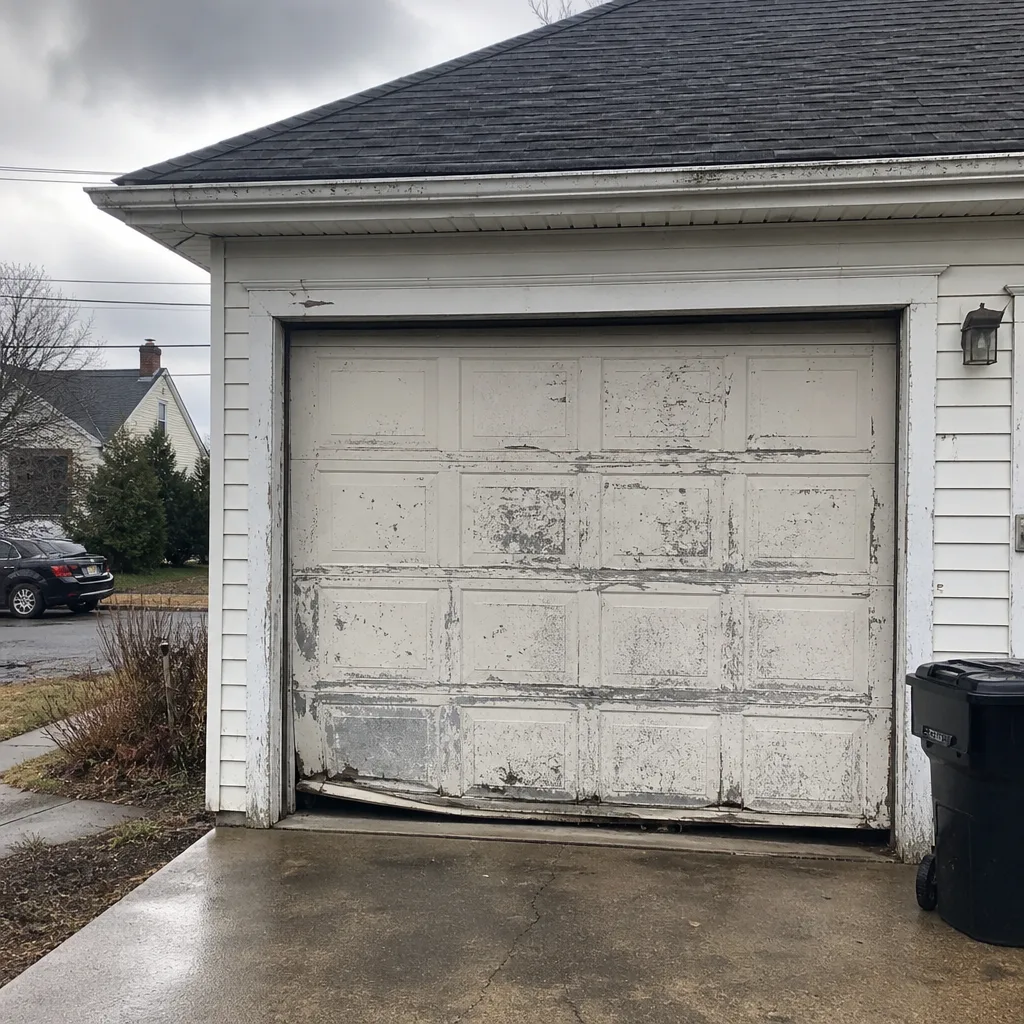 Before
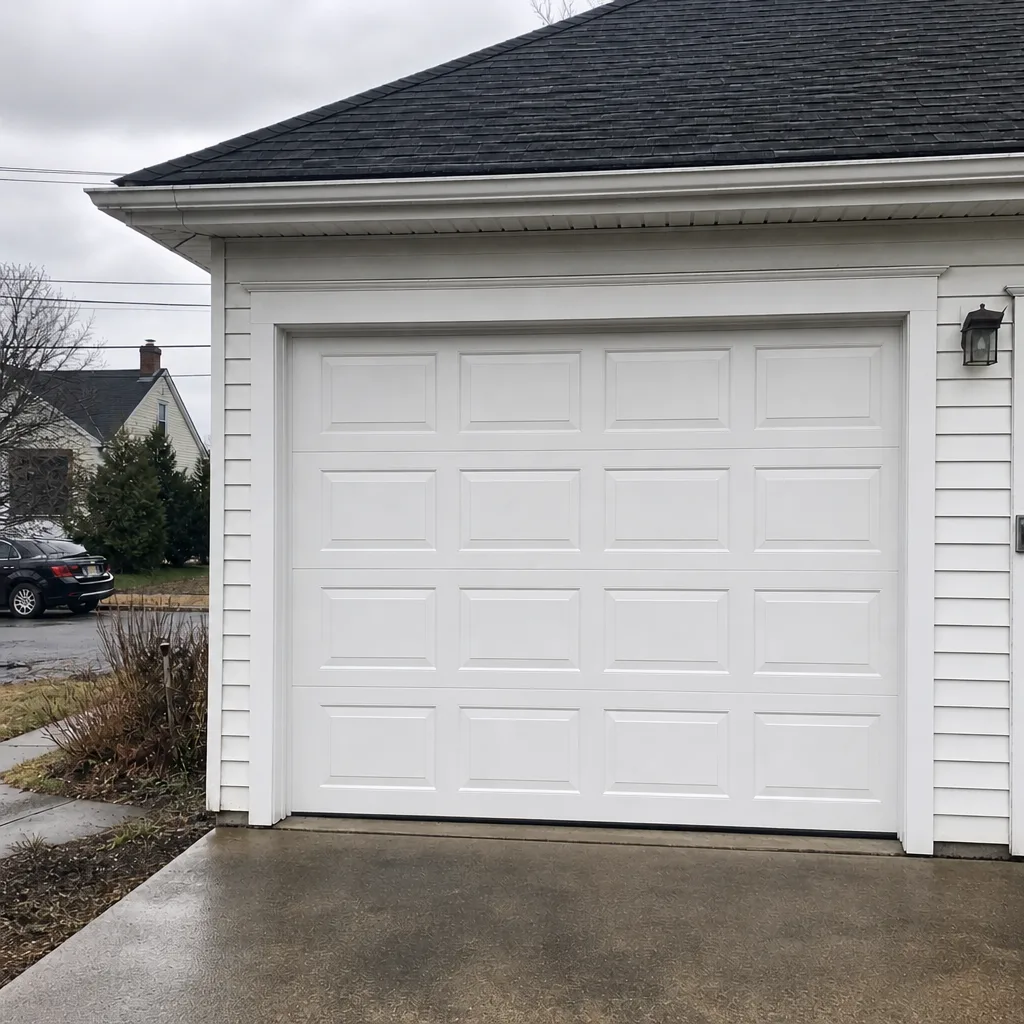 After
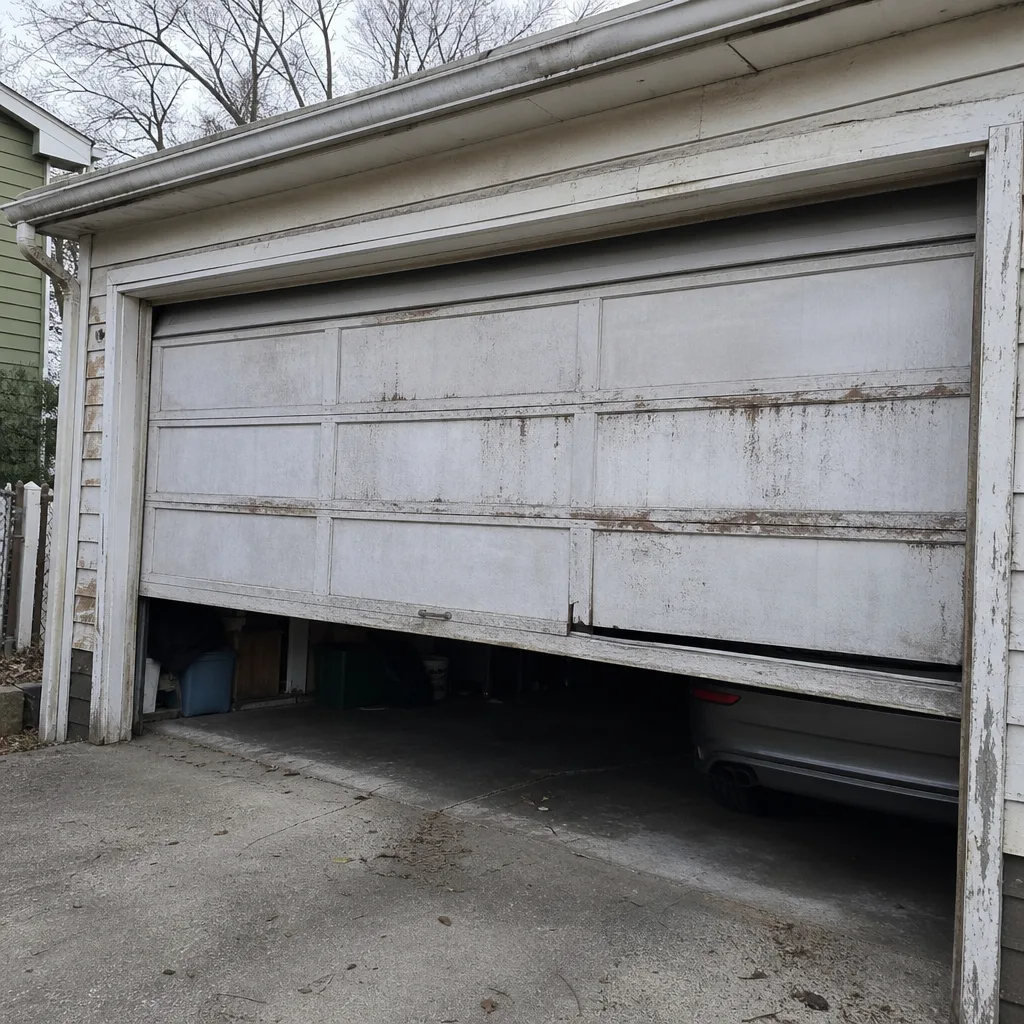 Before
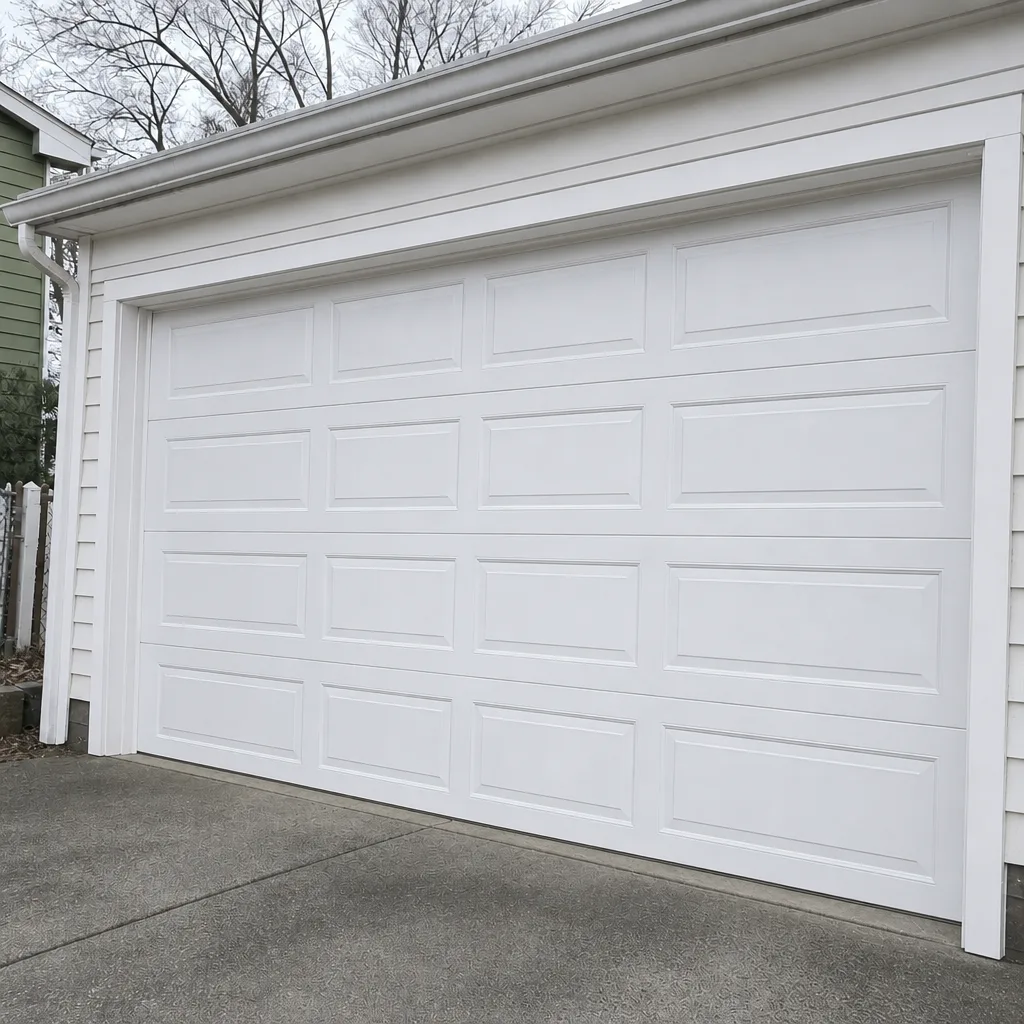 After
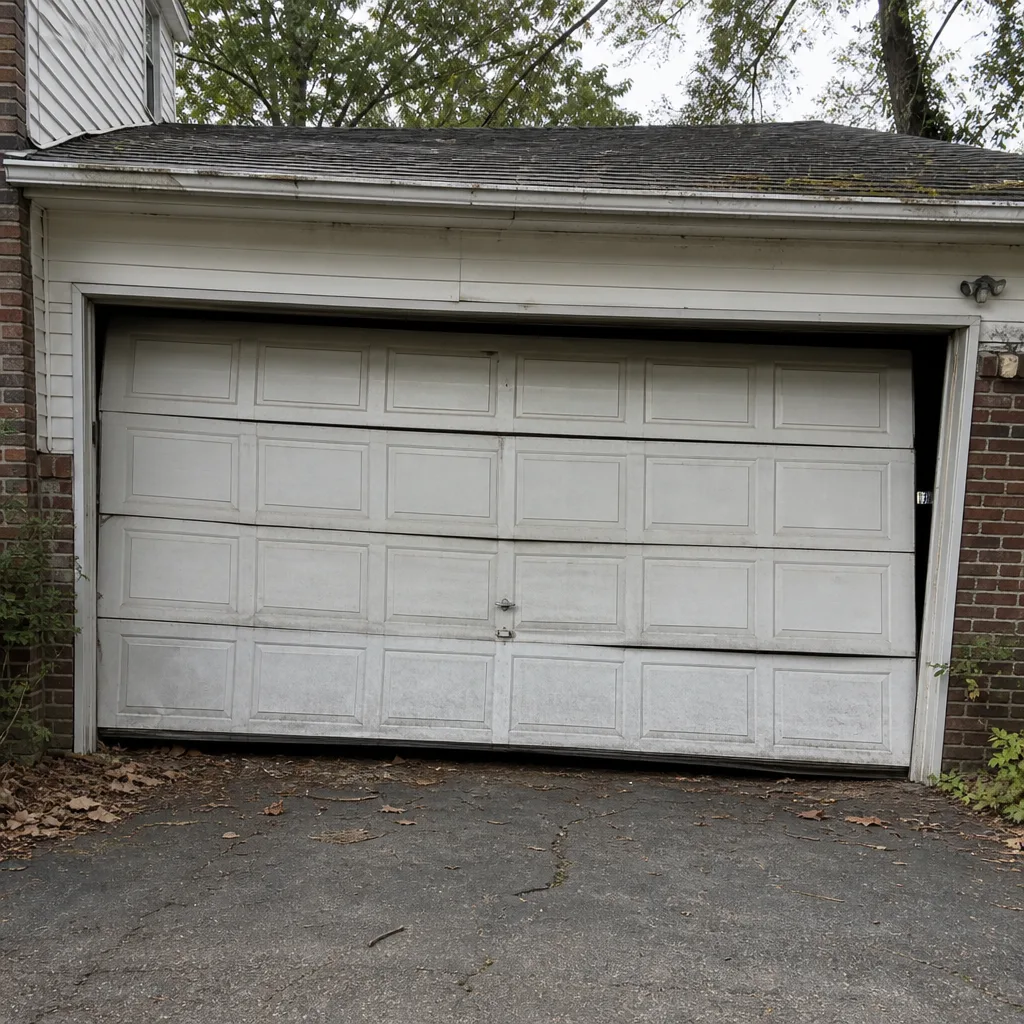 Before
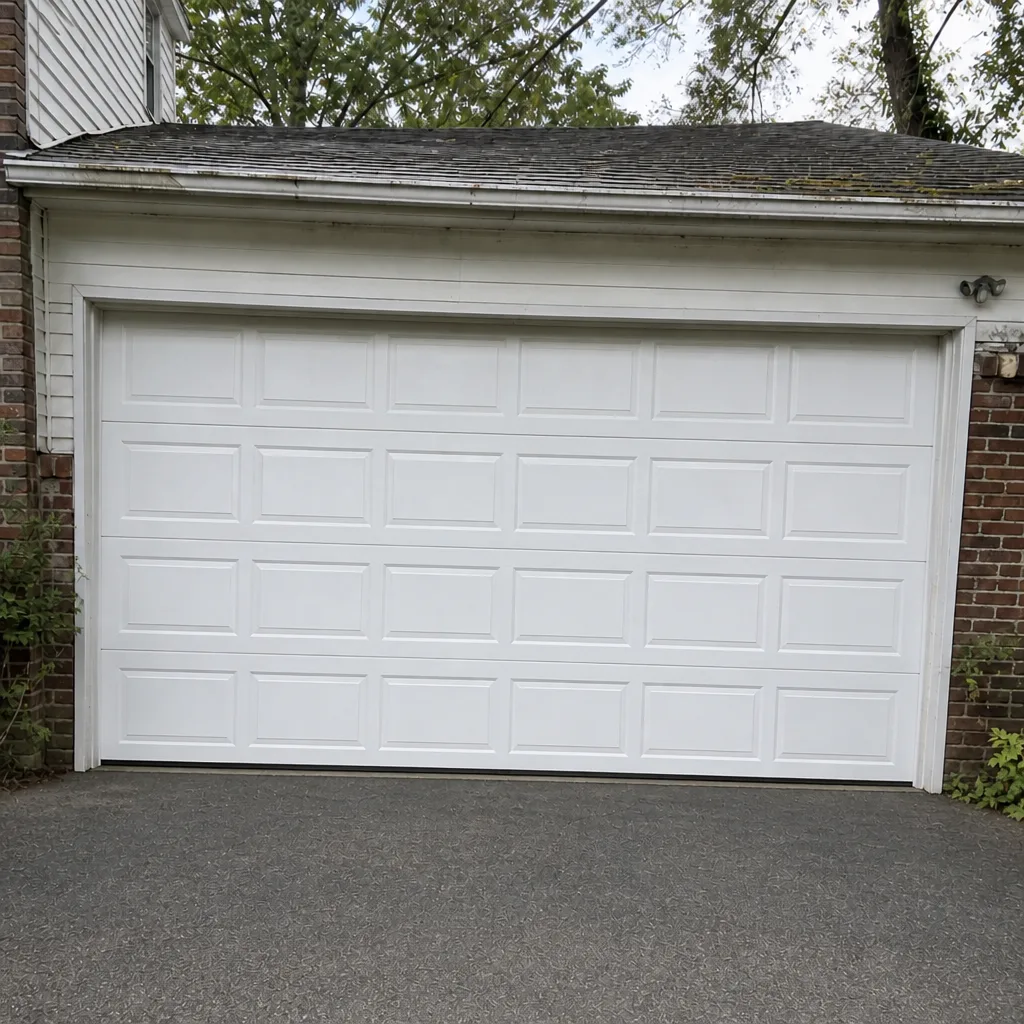 After
When to Call a Professional
Some garage door problems are cosmetic. Others need a trained technician before anything else happens. Call a professional immediately if a spring snaps or cables come loose (these are under extreme tension and are not a DIY repair), if the door goes off-track or hangs crooked, if the opener runs but the door doesn’t move, or if the door closes on something and reverses erratically. Electrical panel work and opener wiring are also jobs to leave to a trained professional. Those aren’t cosmetic and they aren’t safe to poke at. New Brunswick Garage Door Repair Co offers free estimates in New Brunswick. Call (855) 658-5134. We answer 24/7. Fast dispatch from 7am to 7pm, Sunday through Friday.
Frequently Asked Questions
Spring repair in New Brunswick typically lands in a range between $180 and $340 per spring, and a matched pair usually costs about twice a single spring because both springs are replaced together. The written estimate sets the final price before any work starts. Call (855) 658-5134 for an exact quote; estimates are free.
No. New Jersey does not issue a garage door specialty license, but contractors must hold a Home Improvement Contractor registration through the New Jersey Division of Consumer Affairs. Verify the registration through the NJDCA license lookup before any work begins, and ask for the registered business name to match against the record.
In most cases, yes. Emergency garage door service is a genuine offering here, and same-day dispatch is usually available for doors that are stuck open, stuck shut, or off-track. Call (855) 658-5134. We answer 24/7. Fast dispatch from 7am to 7pm, Sunday through Friday.
No. The written estimate sets the price, and it’s quoted and agreed before any work starts. If we find something the initial call didn’t reveal, we discuss it with you in writing before any additional work begins. What you approve on paper is what shows up on the invoice.
The local pro we connect you with is licensed and insured as their state requires. Ask for the certificate of insurance before work starts and verify the registration through the NJDCA lookup. A contractor who won’t produce both documents is telling you something.
We work on the brand door and opener you already own, including LiftMaster, Chamberlain, Genie, Clopay, Amarr, Wayne Dalton, Craftsman, and Raynor. Brand-specific diagnosis matters because a Raynor door and a Craftsman opener fail in different ways. Call (855) 658-5134 if you’re not sure what’s on your wall.
The Bottom Line
Hiring a garage door contractor in New Brunswick comes down to three checks: verify the NJDCA registration, confirm the insurance covers property damage, and get a written scope that names the brands, spring specification, hardware, permit responsibility, and warranty terms. Ask the five spring questions. Treat any low bid missing permit line items or unlisted hardware brands as a warning. A botched install is not just a bad job, it’s a liability that follows you, not the contractor. Do the vetting on the front end and the install is a one-time job. Call (855) 658-5134 for a free estimate.
Written by the team at New Brunswick Garage Door Repair Co.